Freya Bennett · 27 September 2026
The Evolution of Authority Building Techniques for Individual Online Projects in Modern Search Landscapes
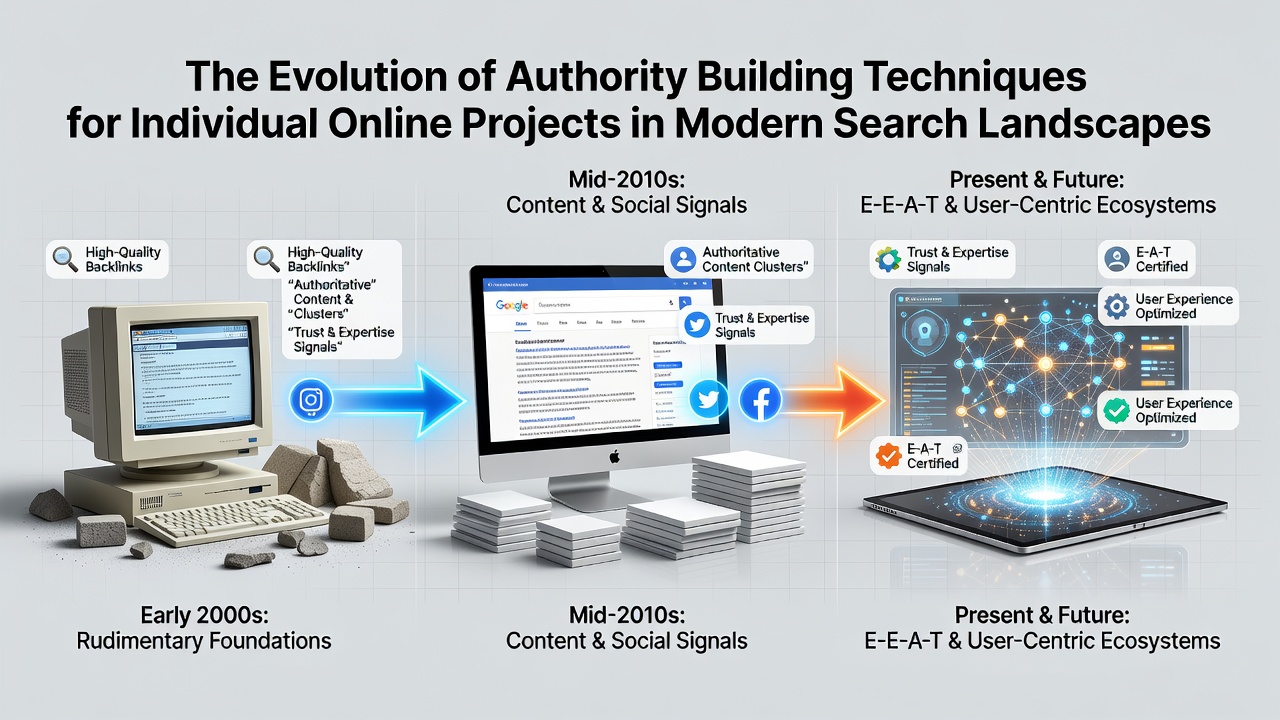
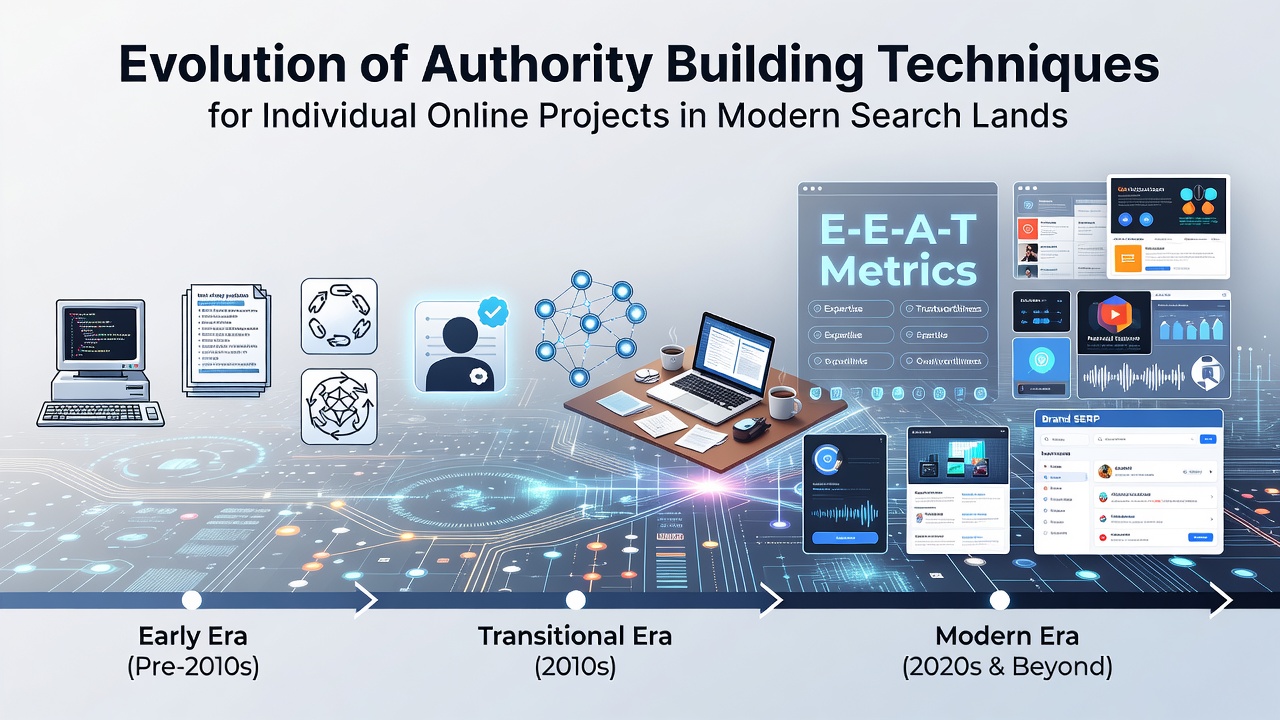
Authority building for individual online projects has shifted through multiple phases since the early days of search engines, moving from basic on-page tactics to sophisticated signals that incorporate user behavior, entity recognition, and content depth. Research indicates that these changes track closely with algorithm updates from major engines, where initial focus on keyword density gave way to link-based metrics by the mid-2000s.
Early Techniques and Their Limitations
Individual operators once relied heavily on directory submissions and reciprocal linking arrangements to establish presence, yet these methods proved vulnerable once engines refined their crawl and evaluation processes. Data shows that by 2010 many solo projects faced ranking drops after updates targeted manipulative patterns, prompting a broader reevaluation of what constitutes credible signals.
Those who studied the landscape at the time observed that simple title tag optimization and meta descriptions could no longer compensate for thin content, while external validation through citations in niche forums offered temporary lifts that rarely sustained long-term visibility.
Transition to Content and Entity Focus
Subsequent years brought emphasis on topical expertise, where operators began structuring content around comprehensive guides and original data sets instead of isolated posts. Studies from academic institutions reveal that search systems started weighting co-occurrence patterns and knowledge graph connections more heavily, allowing individual projects to gain traction through consistent demonstration of subject mastery rather than volume alone.
By the late 2010s, observers noted increased reliance on schema markup and structured data to clarify entity relationships, helping engines distinguish legitimate personal projects from larger commercial networks. This period also saw growth in internal linking strategies that distributed authority across site sections without external dependencies.
Current Approaches in 2026
Algorithms active in September 2026 continue to prioritize experience, expertise, authoritativeness, and trustworthiness signals, yet individual operators now integrate user interaction data such as dwell time and return visits more directly into their planning. Figures from industry reports indicate that projects incorporating original research or primary sources achieve stronger positioning when engines evaluate helpfulness across diverse query types.
Experts have observed that community participation on platforms outside traditional link networks provides indirect authority boosts through mentions and shares, while careful monitoring of core updates allows timely adjustments. Australian government resources on digital competition highlight how smaller entities can compete when they maintain transparent sourcing and avoid aggregation tactics that dilute originality.
Techniques such as collaborative content verification with subject specialists and publication of longitudinal case studies have emerged as viable paths, particularly when engines refine their handling of AI-generated material. Research indicates these methods help projects establish verifiable trails that automated systems can trace back to human contributors.
Integration with Broader Search Changes
Modern search landscapes incorporate multimodal inputs and real-time signals, requiring operators to align content freshness with accuracy checks from multiple angles. Those who've tracked these developments note that projects succeeding in 2026 often combine technical optimization with sustained audience feedback loops, allowing iterative refinement based on actual query performance rather than assumptions.
One case where experts examined solo ventures revealed that sites emphasizing primary data collection outperformed peers dependent on secondary curation, especially after updates that devalued repetitive summaries. This aligns with findings from university-led analyses showing stronger correlation between original contribution and sustained rankings across varied verticals.
Conclusion
Authority techniques for individual online projects have evolved from isolated optimization steps to interconnected systems that blend content quality, entity clarity, and behavioral evidence. Operators who adapt to these layers while maintaining verifiable originality continue to secure positions amid ongoing algorithm refinements, with data showing measurable advantages for those who track both technical and contextual shifts.